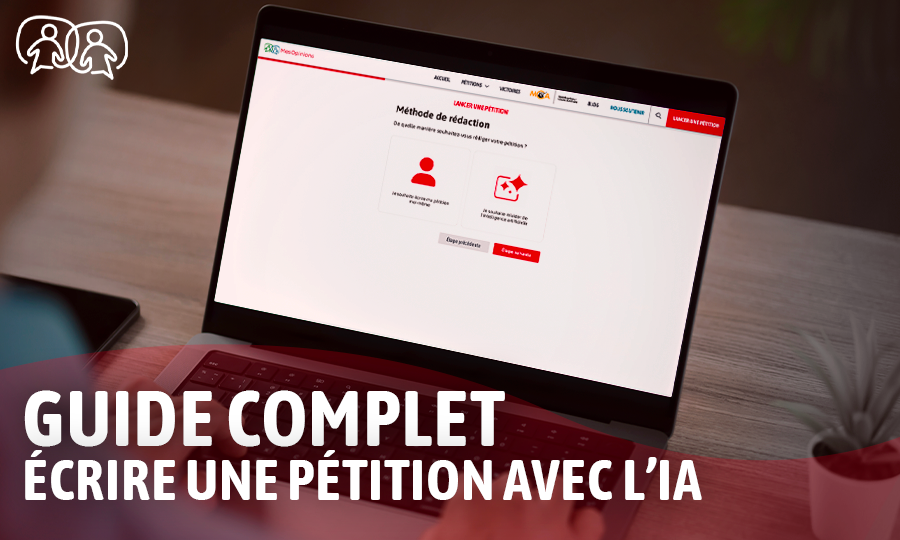


Pétitions en ligne : 5 étapes pour vous lancer

Nous avons toutes et tous été, à un moment ou à un autre, confrontés à une injustice, à une actualité, une décision qui nous a heurté ou choqué. Qui ne s’est jamais dit vouloir agir pour changer les choses et bâtir un monde plus en accord avec ses valeurs ? Internet et les outils numériques permettent aujourd’hui de prendre la parole, de défendre ses idées de se mobiliser en tant que citoyen. Mais lorsque quelque chose vous touche et que vous souhaitez porter une cause, par où commencer ? Vous pouvez évidemment faire une publication sur vos réseaux sociaux, interpeller votre entourage, envoyer des articles à vos proches pour les alerter sur la cause qui vous est chère… Mais avez-vous pensé à la pétition en ligne ?
Mais comment lancer une pétition en ligne ? Quelles règles respecter pour qu’elle marche ? Quelles questions dois-je me poser pour la lancer ? Cet article vous propose une méthode en 5 étapes pour vous assurer que la pétition en ligne que vous allez créer soit la plus efficace possible.
Une fois que vous avez circonscrit votre thématique et votre demande précise, il est conseillé d’user du “storytelling”, c'est-à-dire la capacité à romancer votre cause afin de l’incarner. Écrivez pourquoi cette cause vous tient à cœur. Expliquez pourquoi vous en parlez et donnez les raisons de votre mobilisation. L’expérience personnelle que vous afficherez, le vécu, donnera du fond à votre message et aura donc d’autant plus de chances de convaincre autour de vous. Convaincre vos proches, déjà, qui ont de l’affection pour vous et seront sensibles à votre message ; mais également convaincre des citoyens qui ne vous connaissent pas. Raconter une histoire pour présenter la cause sera gage d’engagement et pourra toucher les gens qui la liront. Il est en effet très différent de dire “je suis contre cela” et “je suis contre cela car un de mes proches a été touché directement”. N’hésitez pas à écrire clairement ce qui vous pousse à entreprendre la création de cette pétition.
Vous savez maintenant précisément de quoi vous allez parler et comment ? Passons à la deuxième étape !
Étape 2 : Demandez-vous qui peut vous aider à atteindre vos objectifs et être victorieux.
Vous devez donc cibler précisément votre demande et vous interroger, en amont, sur qui vous devez alerter pour changer la situation qui vous dérange. Il est capital de pouvoir répondre à cette question afin d’optimiser vos efforts ! Vous cherchez à revenir sur une décision de la mairie ? Quel sera l’interlocuteur privilégié ? Beaucoup pensent qu’alerter directement le Président de la République sur un sujet est le meilleur moyen d’agir ; mais viser trop haut lorsque ce n’est pas nécessaire, c’est se mettre des bâtons dans les roues. Si votre combat est local, visez local. Si votre combat nécessite l’intervention d’une personne en particulier pour aboutir, contactez cette personne. Si, au contraire, la cause que vous défendez se décide au niveau du gouvernement, adressez votre pétition directement au gouvernement. Plus vous chercherez à atteindre des personnalités médiatisées et influentes, plus il sera complexe de capter leur attention. Malgré cela, certaines causes nécessitent de faire réagir un député, un ministre, voire le Président ; le tout est de bien comprendre en amont qui sont les personnes qu’il va falloir convaincre pour faire émerger votre sujet et être victorieux.
La bonne nouvelle, c’est que nous avons déjà rédigé un article sur le champ d’action des collectivités en France, afin de vous aider à répondre à cette question.
Étape 3 : Rédigez une pétition accessible à tous !
Le titre, d’abord. Il doit être le plus court possible, accrocheur (et pas racoleur!), et surtout compréhensible par tous. Même si votre sujet est très technique, il faudra simplifier et faire de la pédagogie pour que tous les citoyens se l'approprient. Exprimez clairement la vision du sujet dans le titre afin de capter l’attention du lecteur et l’inciter à découvrir le sujet.
Le contenu, maintenant. Il ne doit pas forcément être très long. Si le texte de votre pétition est trop rédigé et ne va pas à “l’essentiel”, il y a fort à parier que les lecteurs n’iront pas jusqu’au bout ! Schématiser, donnez des chiffres, trouvez des études, expliquez simplement ce que votre combat pourrait changer et en quoi il est légitime. En plus de permettre à tous de comprendre ce que vous essayez de faire, vous obtiendrez bien plus facilement l’adhésion des internautes qui, sans même être experts du sujet, pourront rejoindre votre mobilisation.
L’illustration, enfin. Lorsque votre pétition sera partagée via le lien MesOpinions, c’est l’illustration de votre pétition qui s’affichera. Cela signifie, comme c’est le cas pour le titre, que l’image sera la vitrine de votre pétition. Si vous réussissez à intégrer un titre et une image marquants et pertinents, vous augmentez fortement vos chances de récolter des signatures. Veillez à avoir une image qui représente et incarne votre sujet ; les images trop génériques sont moins appréciées et génèrent souvent moins d’intérêt de la part des citoyens. N’hésitez pas non plus à intégrer sur votre image des éléments supplémentaires. Par exemple, si vous lancez une pétition pour empêcher la fermeture d’une classe, il pourra être intéressant de choisir une photo liée à l’univers scolaire, mais surtout d’ajouter des informations sur l’image afin de la personnaliser (nom de la pétition, incitation à l’action…).
Ces modifications sont réalisables avec des outils comme Powerpoint ou encore Canva, afin d'intégrer du texte supplémentaire facilement.
Etape 4 : choisissez le bon moment
Une fois que vous aurez défini clairement les objectifs de votre mobilisation, rédigé un texte compréhensible et réussi à identifier le ou les destinataires pertinents, il faudra également vous poser la question du bon moment pour lancer votre pétition. Il sera plus facile de mobiliser des parties prenantes (signataires, journalistes, responsables politiques...) si vous rattachez votre action à une actualité.
Par exemple, si vous lancez une pétition afin d’améliorer la prise en charge des personnes atteintes d’une maladie en particulier, il peut-être pertinent d’attendre une actualité précise avant de vous lancer : une journée internationale liée à la maladie, un événement dédié à cette dernière ou encore une innovation médicale peuvent être autant d’occasions de lancer votre mobilisation afin de plus facilement capter l’attention. Si les médias et autres responsables institutionnels sont amenés à parler de votre sujet du fait de l’actualité, il sera plus aisé de vous faire entendre en lançant votre pétition à ce moment. Cela ne sera pas toujours possible, mais essayez au maximum de vous inscrire dans l’actualité pour profiter de l’engouement autour d’un sujet, vous serez d’autant plus pertinent.
Commencez par votre premier cercle : vos amis, votre famille, votre entourage proche. Parlez-leur de votre mobilisation, racontez votre histoire et présentez-leur la pétition que vous avez créé. Faites le à l’oral mais également sur vos réseaux sociaux : Facebook, Twitter, Instagram, Whatsapp, LinkedIn… Quelque soit la plateforme sur laquelle vous êtes actif ou active, publiez votre pétition et incitez vos contacts à la signer et à la partager.
N’hésitez pas non plus à interpeller les destinataires de la pétition ou des alliés potentiels : associations, ONG, personnalités influentes engagées dans un combat similaire… Qui pouvez vous mobiliser pour porter le combat à vos côtés ? Les auteurs MesOpinions sollicitent régulièrement le soutien d’influenceurs afin qu’ils signent ou partagent leur pétition. Faites une recherche sur les réseaux sociaux pour voir qui serait susceptible de donner de l’écho à votre combat !
Les médias et journalistes peuvent également jouer un rôle important dans la montée en puissance de votre pétition. Vous pouvez les alerter de la même façon et tenter d’attirer leur attention pour espérer la publication d’un article. Tous les mois, des dizaines d’articles relayant des pétitions sont diffusés par la presse, pourquoi pas la votre ?
Si vous souhaitez en savoir plus sur les moyens de mobiliser autour de votre pétition, il existe un article dédié sur notre blog.
Créer un engouement et une mobilisation en ligne est à la portée de tous. Si vous choisissez la pétition comme l’outil (ou l’un des outils) de cette mobilisation, vous avez maintenant toutes les clés en main pour maximiser vos chances de réussite et récolter le plus de signatures possibles.
Si vous avez davantage de questions, n’hésitez pas à nous contacter afin de profiter de l’expertise de notre équipe Auteurs. Sinon, lancez- vous !